

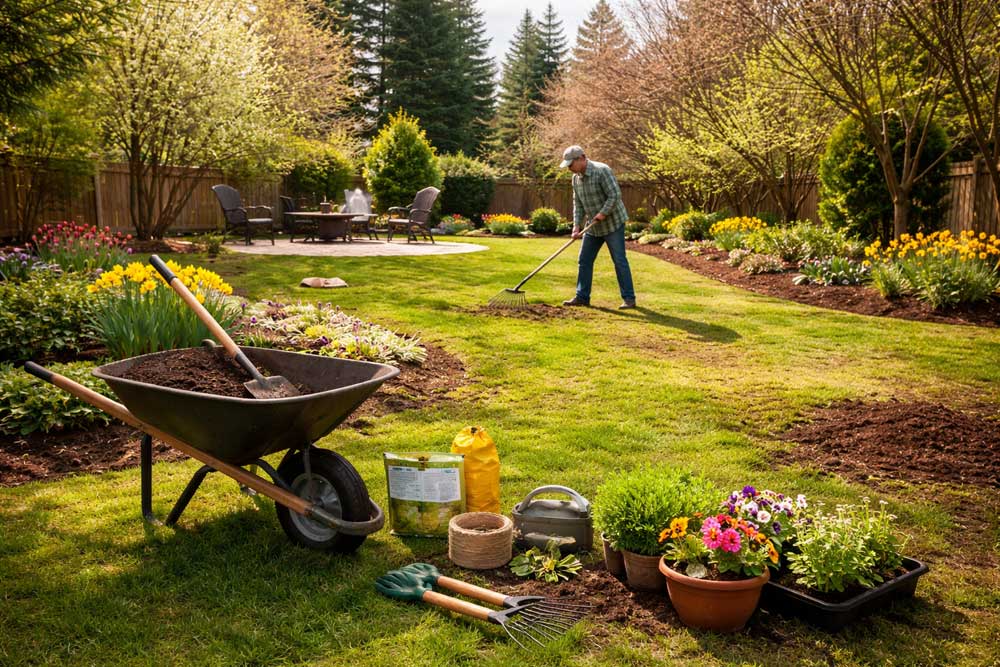
Winter in Canada is hard on outdoor spaces. By the time the snow finally melts, most lawns and gardens look like they’ve been through a war — and in a way, they have. Months of frost, ice, compacted snow, and freeze-thaw cycles leave behind damage that ranges from cosmetic to structural. The good news is that most of it is fixable, and spring is the best possible time to assess and act.
Here is a practical guide to getting your outdoor space back in shape after a Canadian winter.
Start With a Full Assessment
Before you touch anything, walk your property and take notes. You’re looking for four things: lawn damage, plant casualties, drainage problems, and hardscape shifts.
Lawn damage shows up as brown or grey patches, thinning areas, or sections where the grass has been completely smothered by ice sheets. Some of this will recover on its own as temperatures rise. Some of it won’t.
Plant casualties are usually obvious — broken branches, frost-heaved perennials with roots poking out of the ground, shrubs that didn’t make it through. Scratch a stem with your thumbnail. If you see green underneath, the plant is alive. If it’s brown all the way through, it didn’t survive.
Drainage problems reveal themselves in early spring when the ground is saturated. Puddles that sit for more than 24 hours after rain point to low spots or compaction issues that will cause problems all season if you don’t address them.
Hardscape shifts are subtle but important. Walk your patio, walkway, and steps carefully. Look for pavers that have heaved or settled, retaining walls that have shifted, and steps where the rise or run has changed. These are structural issues that get worse if ignored.
Lawn Recovery: Timing Is Everything
The biggest mistake homeowners make is working on their lawn too early. If the soil is still soft and saturated, walking on it or running a mower compresses the root zone and delays recovery by weeks.
Wait until the lawn passes the footprint test: step on the grass, then step off. If your footprint stays visible for more than a few seconds, the soil is too wet. Come back in a few days.
Once conditions are right, here’s the sequence:
A thorough spring rake removes dead thatch, lifts matted grass, and breaks up any mold patches that formed under snow. Use a flexible lawn rake and work in multiple directions. This step alone makes a significant difference.
Most homeowners reach for fertilizer immediately, but applying the wrong product at the wrong time can do more harm than good. A basic soil test (available at most garden centers) tells you what your soil actually needs.
For areas where the grass didn’t survive, loosen the soil surface with a rake, spread seed appropriate for your light conditions, press it in lightly, and keep it moist until germination. In Canada, wait until nighttime temperatures are consistently above 7°C before seeding.
If your lawn was heavily trafficked last year or has clay soil (common in many Canadian cities), core aeration in spring helps oxygen, water, and nutrients reach the root zone. Do this before overseeding for best results.
Gardens: Remove the Dead, Protect the Living
Spring garden cleanup is a balance. You want to remove winter debris without damaging plants that are just beginning to emerge.
Cut back ornamental grasses to about 10 centimeters from the ground before new growth starts. For perennials, wait until you can see new shoots emerging at the base before removing last year’s stalks — those stems provided insulation through the winter and cutting them too early can expose tender growth to a late frost.
Frost-heaved plants — where the root ball has been pushed out of the ground by freeze-thaw cycles — need to be pressed back into the soil gently and watered in. If the roots have dried out significantly, the plant may not recover, but it’s worth trying.
Hold off on mulching until the soil has warmed to at least 10°C. Mulching too early traps cold in the soil and slows warming. Once conditions are right, a fresh layer of 7 to 10 centimeters of shredded bark or wood chip mulch will retain moisture, moderate soil temperature, and suppress weeds through the summer.
Drainage: Fix Problems While the Ground Is Showing You Where They Are
Early spring is actually the best time to address drainage because the water is showing you exactly where the problems are. Take photos of standing water areas and note how long they take to drain.
Minor low spots can often be corrected by topdressing with a mix of topsoil and compost, gradually building up the grade over one or two seasons. More significant drainage problems — water collecting near a foundation, chronically wet zones in the middle of a lawn, or areas where surface runoff is causing erosion — usually require a more systematic solution like a catch basin, French drain, or regrading.
One thing to check specifically: the grade around your home’s foundation. Soil should slope away from the house by about 6 centimeters over the first 3 meters. If it has settled or shifted over winter, correct it early before the spring rains saturate the area.
Hardscape: When to DIY and When to Call
Minor surface issues on interlocking patios — a slightly raised paver here, a slightly sunken one there — are often the result of frost heave and can sometimes be corrected by lifting the paver, adjusting the bedding sand underneath, and resetting it. If you have a rubber mallet and a level, this is a manageable weekend project for isolated pavers.
What isn’t a DIY fix: multiple pavers that have shifted in the same direction, retaining walls that have leaned or cracked, steps where the structural base has moved, or drainage patterns that have changed around hardscape edges. These point to base issues — the compacted stone foundation underneath the pavers has shifted or settled — and surface-level fixes won’t hold. A professional assessment will tell you whether spot repairs are viable or whether a section needs to be rebuilt properly.
It’s worth getting that assessment done in spring, before the full construction season starts and contractor schedules fill up.
The Bottom Line
Spring yard recovery isn’t complicated, but it requires patience and the right sequence. Assess before you act. Let the soil dry out before you work it. Fix drainage while the problems are visible. And don’t ignore hardscape shifts — a paver patio or set of steps that’s slightly off now will be significantly worse by next spring.
The yards that come back strongest every spring are the ones that got proper attention in fall and proper assessment in spring. Start with a walkthrough, make your list, and work through it methodically.